
1776
Continental paper
Independence, new Continental notes, and a book that still treated gold and silver as money.
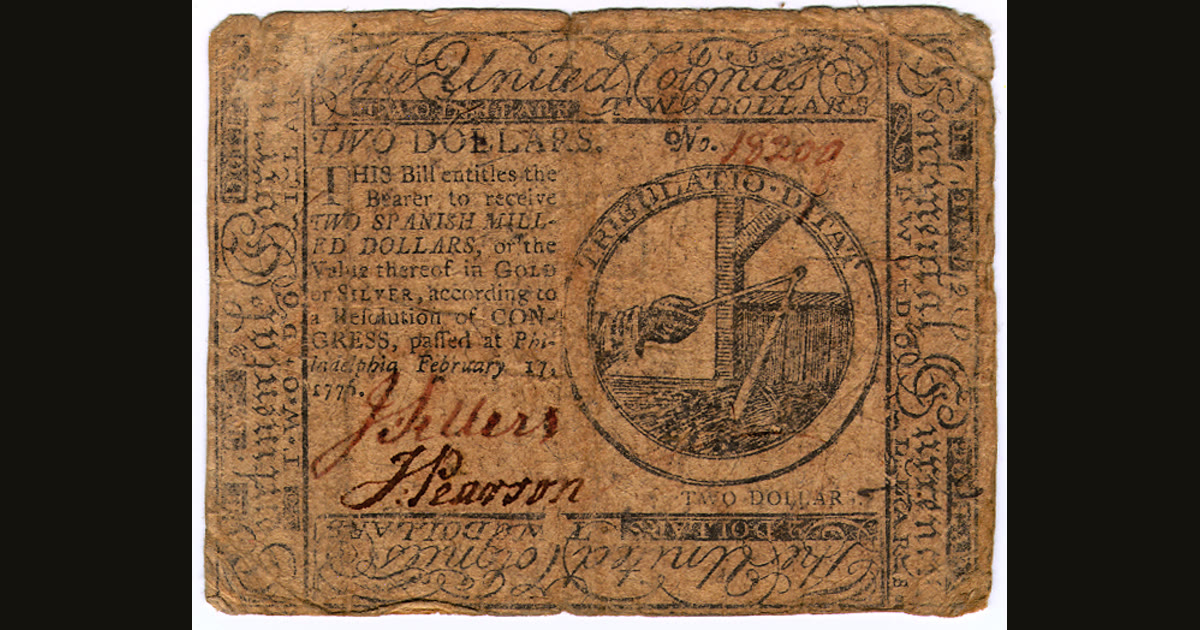
On 4 July 1776 the Continental Congress declared independence. The war was already being paid in part with Continental currency, first authorized in 1775. The two-dollar note of 17 February 1776 promises the bearer two Spanish milled dollars, or the value in gold or silver. The promise is printed. The metal is not the paper.
Silver and gold coin, including the Spanish dollar, remained the metal people could test. The later saying “not worth a continental” names the paper’s collapse in the years after this one. It is not a 1776 price. The same year, Adam Smith’s Wealth of Nations (9 March) still described gold and silver as the money trade had selected.