
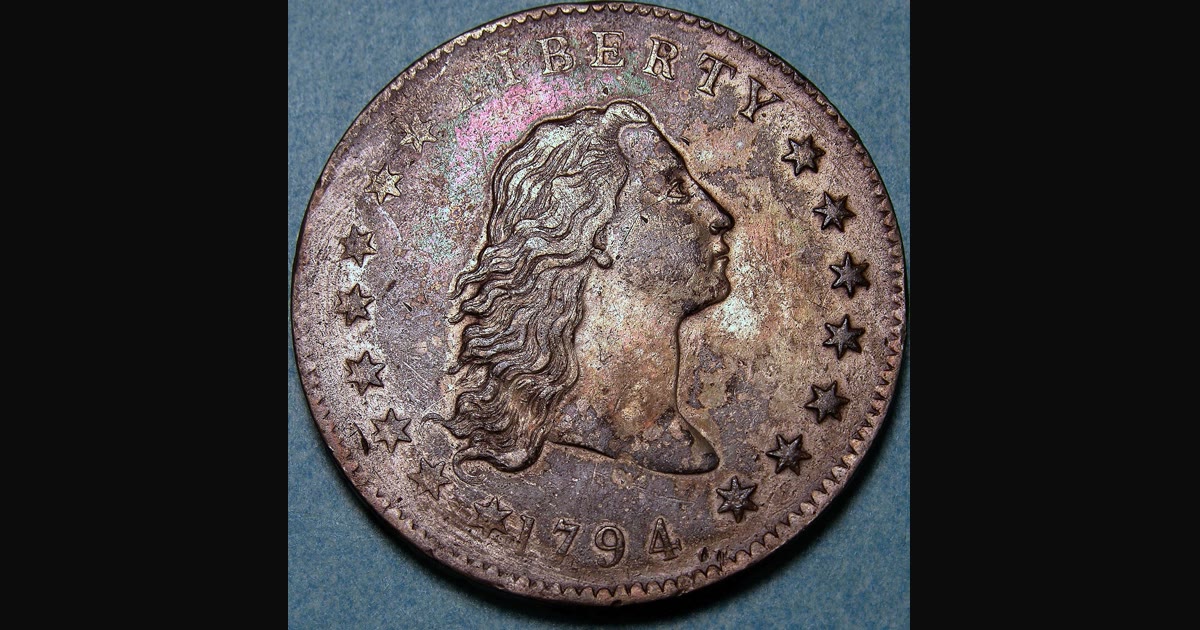
On 2 April 1792, Congress wrote gold and silver into United States law at a mint ratio of fifteen to one, so a dollar could be paid in either metal at that legal relation. Which metal actually stayed in circulation was decided by the market ratio abroad, not by the preamble. When world prices moved, Gresham’s pattern appeared: the legally overvalued metal stayed, and the other was exported or hoarded.
The statute did not invent American money. It named a unit for a republic that already paid in Spanish dollars, wrote gold beside that silver at a fixed legal price, and then left the world market to decide which metal actually circulated. Within a dozen years the Mint had stopped striking its two headline coins. Forty-two years later Congress moved the ratio.
A mint, and a dollar in two metals
The Coinage Act of 1792 established a Mint in Philadelphia under its first director, David Rittenhouse, and defined the dollar in both gold and silver. A silver dollar was to contain 371.25 grains of pure silver, and gold coins were set so that fifteen ounces of pure silver equaled one ounce of pure gold at the Mint. That 15:1 ratio was the legal bridge between the two metals.
The Act also named smaller silver coins and gold eagles, half-eagles, and quarter-eagles, with copper cents and half-cents for the smallest change. Either metal could settle a dollar debt at the posted weights, which is what made the design bimetallic in law. The statute did not invent money. It named a unit and a ratio for a republic that already traded in Spanish dollars and foreign coin.
Hamilton’s Report on the Establishment of a Mint (1791) had argued for a bimetallic dollar and for a ratio close to market practice, and the 1792 Act is what Congress made of that argument. Later politics would treat “bimetallism” as a slogan. In 1792 it was a mint board: two metals, one legal unit, a fixed conversion.
The Spanish dollar in the background
The early United States did not invent its silver weight from blank paper. The Spanish eight-real piece — the piece of eight — had long been the common dollar of Atlantic trade. American contracts and statutes often meant that coin when they said “dollar.” The 1792 silver weight sat close to that familiar piece.
Foreign coin remained legal tender for years, because the Mint was slow to supply enough domestic pieces, and what actually circulated was a mix of Spanish and other foreign silver, scarce gold, and bank notes of uneven quality. The statute named an American unit. Daily payment still used what was in the bag.
Potosí silver and Spanish minting had already made a global silver coin. The United States adopted a dollar that traders already understood, then wrote gold beside it at a fixed ratio — the bimetallism that American politics would fight over for the rest of the century.
Mint ratio versus market ratio
A mint ratio is a legal price: how many ounces of silver equal one ounce of gold at the Mint. A market ratio is what traders actually pay in London, Amsterdam, or Paris. When the two drift, arbitrage follows. The metal that is cheaper at the Mint relative to the world is brought in for coinage. The metal that is dearer at the Mint is melted, exported, or hoarded.
That is Gresham’s pattern in mint dress: the legally overvalued metal stays in circulation; the undervalued metal leaves. A preamble cannot outvote the price of silver in London.
Through the early nineteenth century, silver often looked cheap at 15:1 relative to European gold–silver prices, so gold tended to leave and the republic’s circulating coin leaned silver. The legal bridge still said both metals. The till said otherwise.
The Mint felt the arbitrage at once. New, full-weight American silver dollars were shipped to the West Indies and swapped for worn Spanish pieces, which came back to be recoined. Gold eagles were worth more as metal abroad than as coin at home, and they were melted or exported. By 1804 the Mint had stopped striking both the silver dollar and the eagle. Coining the headline pieces had become a subsidy to the traders who carried them away.
The 1834 correction
In 1834 Congress cut the pure gold in the ten-dollar eagle from 247.5 grains to 232 and left the silver dollar alone. The mint ratio moved to roughly 16:1. The intent was gold-friendlier: to bring gold back into circulation by making an ounce of gold buy more silver at the Mint than before.
After 1834, gold coins became more common in domestic use. Silver dollars and smaller silver still mattered, but the legal tilt had shifted. The arithmetic was the same as in 1792 — a fixed ratio meeting a moving market — only the numbers changed. When Congress left the standard silver dollar off the coin list in 1873, a system that already leaned gold made the omission easy to frame as clarification.
1834 did not end silver politics. Subsidiary silver and later “free silver” campaigns still filled the century. What it showed was that Congress could rewrite the bridge when circulation failed the preamble.
A short timeline
- 1791: Hamilton’s mint report argues for a bimetallic dollar and a practical gold–silver ratio.
- 2 April 1792: Coinage Act; Mint established; silver dollar at 371.25 grains pure; gold at 15:1.
- 1790s–1820s: Foreign silver (especially Spanish dollars) remains central to circulation; gold often scarce at 15:1.
- 1804: Mint stops striking silver dollars and gold eagles as both leave the country.
- 1834: Pure gold in the eagle cut from 247.5 to 232 grains; mint ratio moves to ~16:1; gold returns more readily to the till.
- 1873: Coinage Act drops the standard silver dollar from free coinage.
The bridge and the till
Congress could name the dollar in two metals and post a ratio between them. It could not make merchants in Havana or London honour that ratio. In 1792 the law said gold and silver. For forty years the till said Spanish silver, and gold went abroad.
The dollar’s weight came from the Spanish piece that had crossed the Atlantic long before the republic. The ratio came from Hamilton’s arithmetic. What circulated was decided by the gap between the two, and by 1834 Congress had learned to move the ratio rather than argue with the market.