
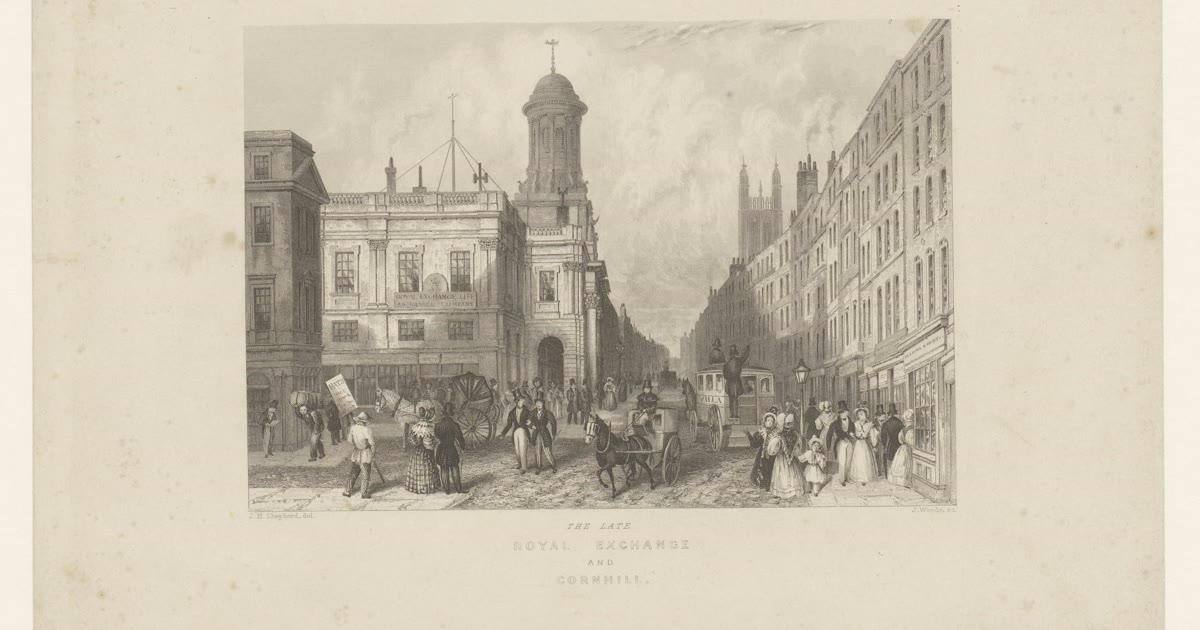
In February 1797 an Order in Council stopped the Bank of England paying gold for its notes, and the Restriction Act made that stop a statute, so the paper stayed in London’s tills and the pound kept its name even though holders could no longer test it in coin at Threadneedle Street. Gold went to a premium against that paper, and it would be more than twenty years before the window opened again.
Those notes were already a century old. In 1694, during the Nine Years’ War, a private corporation had been chartered to lend about £1.2 million to the Crown and to issue paper the public could pass, and that is the paper that was still in the tills when payout stopped.
When William III was at war with Louis XIV, the Crown needed a large loan at once. In London, goldsmith running-cash notes already circulated as private claims on metal left with a keeper, and paying with a slip of paper was already a habit that came from those goldsmiths and from warehouse receipts. The Stop of the Exchequer in 1672 had shown what that habit was worth when a sovereign closed the window on paper that had funded the Crown.
The Bank of Amsterdam had opened in 1609 as a municipal ledger for the bill market — mixed coin in, bank money out, bills settled by giro — and for a long time its reputation was that it did not lend, though concealed lending and the collapse of the agio came much later. The 1694 statute created a company whose first asset was a loan to the state and whose liabilities included notes the public could pass. Those notes were a promise to pay coin, and they came from a corporation that had already lent to the Crown.
A charter for a war, 1694
Parliament needed money for the Nine Years’ War, and the scheme that raised it was a subscription of about £1.2 million lent to the government at interest against a stream of taxes. The subscribers were incorporated as the Governor and Company of the Bank of England, a corporation that could deal in bills and bullion, take deposits, and issue notes payable on demand in coin.
William Paterson and others had argued for such a bank, and a private company received the public privilege because the fiscal need was urgent. People took the notes because the window paid, and because London learned to treat that paper as cash.
The charter was renewed because the state still needed the lender, and later renewals bought more loans, longer privileges, and a tighter hold on joint-stock note issue in England.
Notes become London paper
Over the eighteenth century those notes became the ordinary paper of London, so a merchant could pay a debt with one without carting coin across the City. As long as redemption was ordinary, the note was a convenient claim on metal: the unit remained the pound, and the paper was how it moved.
Country banks issued their own notes outside London, but in the capital these notes crowded the field. From 1708 no other English bank with more than six partners could issue notes — a joint-stock monopoly that left private country issue standing, but kept a second Bank of England from appearing.
Holders could present a note and ask for gold, and counterparties took the paper because they trusted that window. While it was open the note was a claim on metal; when it shut, the same note was still what people spent, if they would hold it.
Restriction, 1797
War with revolutionary France strained the gold stock, as coin left for subsidies, for armies, and for hoards when invasion talk rose. In February 1797 an Order in Council told the Bank to stop paying gold for its notes, and the Bank Restriction Act of 1797 made that suspension statute, so the notes stayed in circulation while the window did not.
During the restriction, when coin had left daily trade and paper filled the till, the Bank issued small notes of one and two pounds. The Bullion Report of 1810 argued, from the premium of gold over notes, that the paper pound had depreciated.
Prices rose and gold stood at a premium, but the notes did not collapse, and the public kept paying with them through the long war with France.
Resumption in the 1820s
Cash payments did not return with the first peace. After Waterloo the question was when, and at what gold definition, the Bank would pay again, and Peel’s Act of 1819 set the path: full gold payout on notes resumed in 1821, two years ahead of the Act’s final date.
The notes had stayed in use through the war, and in 1821 the Bank paid gold again at the old metal unit because the issuer had survived and chose to pay.
The loan book and the note issue remained; what returned was the ordinary test at the window.
A short timeline
From the Exchequer stop to cash payments again.
- 1672. Stop of the Exchequer; private paper that funded the Crown meets a closed sovereign window.
- 1694. Charter: about £1.2 million as a war loan, with a note issue attached.
- 1708. Joint-stock note-issue monopoly in England; the notes become the London standard.
- Eighteenth century. The notes become the ordinary paper of London.
- February–May 1797. Order in Council, then the Bank Restriction Act: gold payout on notes stops.
- 1810. Bullion Report: notes trade at a discount to gold.
- 1819–1821. Peel’s Act; cash payments resume. Restriction ends in the 1820s.
War finance with a note attached
Once notes are the ordinary cash of a capital, the issuer can be leaned on, and a crown can borrow against a charter. London’s daily money had become a bank’s paper, and that paper lost its metal window, then got it back.
France tried two other answers in the same century. John Law fused a note-issuing bank with a trading company, and the System broke in 1720; the revolutionary assignats of the 1790s tied paper to seized land and died in 1796. Neither came back to metal at the old unit. London did, in 1821.